Hit enter to search or ESC to close
Aug 18, 2023

The vacuum freezing and drying process involves three main steps: freezing, primary drying, and secondary drying.

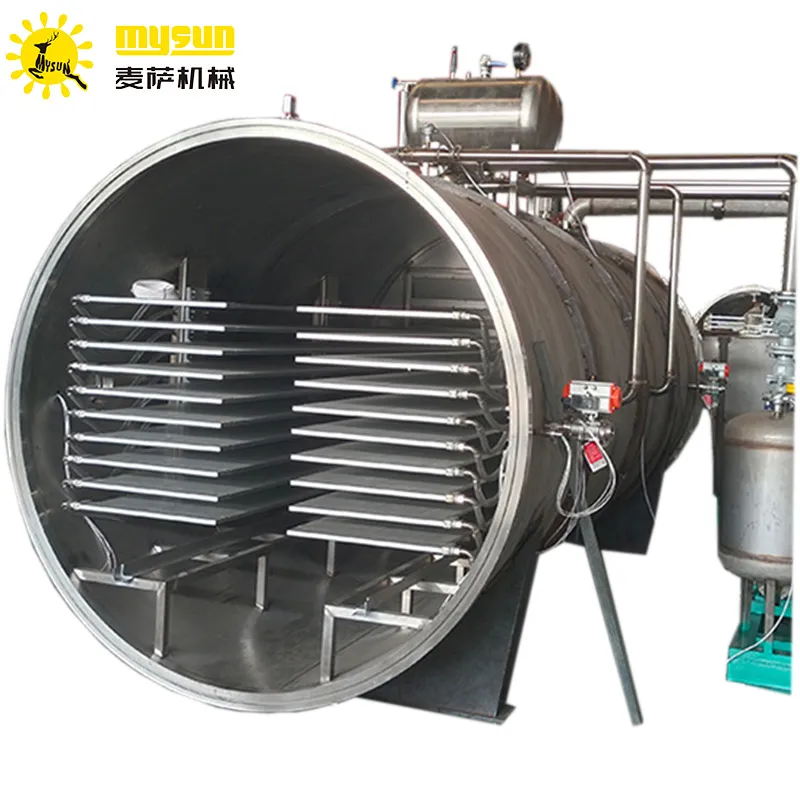
1. Freezing: The first step involves rapidly freezing the product to a low temperature. This is typically done by placing the product in a low-temperature freezer or using a liquid nitrogen cooling system. Freezing the product helps to preserve its structure and prevent damage during the drying process.
2. Primary Drying: Once the product is frozen, the vacuum is applied to create a low-pressure environment. This causes the frozen water within the product to sublimate directly from ice to vapor without melting into a liquid phase. The vapor is then captured by the vacuum system, leaving behind a dried product. Primary drying usually takes a considerable amount of time and removes the majority of the moisture from the product.
3. Secondary Drying: After primary drying, some residual moisture may still be present in the product. The secondary drying step involves raising the temperature slightly and reducing the pressure further to remove any remaining moisture. This step helps to ensure that the product is completely dry and stable for long-term storage.
Vacuum freezing and drying equipment can be designed as batch or continuous systems. In batch systems, the product is loaded into trays or containers and placed inside a vacuum chamber for processing. Continuous systems involve the use of conveyor belts or shelves that move the product through the various stages of freezing and drying.
The advantages of vacuum freezing and drying equipment include the preservation of product quality, extended shelf life, and retention of the product's nutritional value. This technology is particularly useful for delicate or heat-sensitive products as it allows for gentle drying at low temperatures.
Overall, vacuum freezing and drying equipment is an essential tool in various industries for preserving and storing a wide range of products.


